The Silenced
"Every field of science has a woman whose name should be on the prize. This page is a small correction. A long-overdue footnote. Their names belong here."
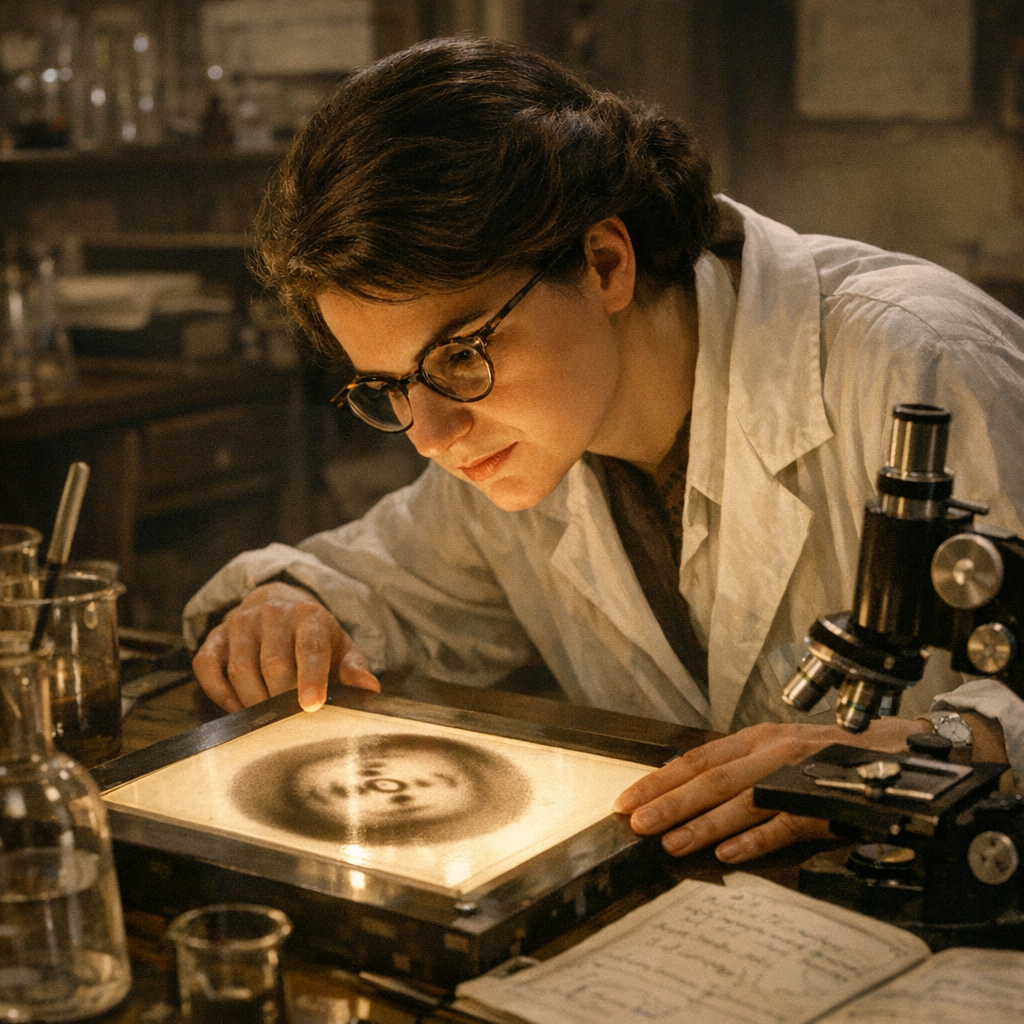
Rosalind Franklin · DNA
Photo 51 — the X-ray crystallography image that revealed the double helix structure of DNA — was taken by Rosalind Franklin. Maurice Wilkins showed it to Watson and Crick without her knowledge or permission. They used it to build their model. They won the Nobel Prize, shared with Wilkins. Franklin was not even mentioned in their acceptance speeches. She died of ovarian cancer at 37 — likely caused by the very X-rays she used to photograph the structure of life. The three men who took credit for her work lived into their 80s and 90s, collecting honours. For decades, textbooks described her as Wilkins' "assistant." She was his colleague. His equal. In many ways, his superior. Photo 51 was hers. The discovery was hers. The Nobel was theirs.
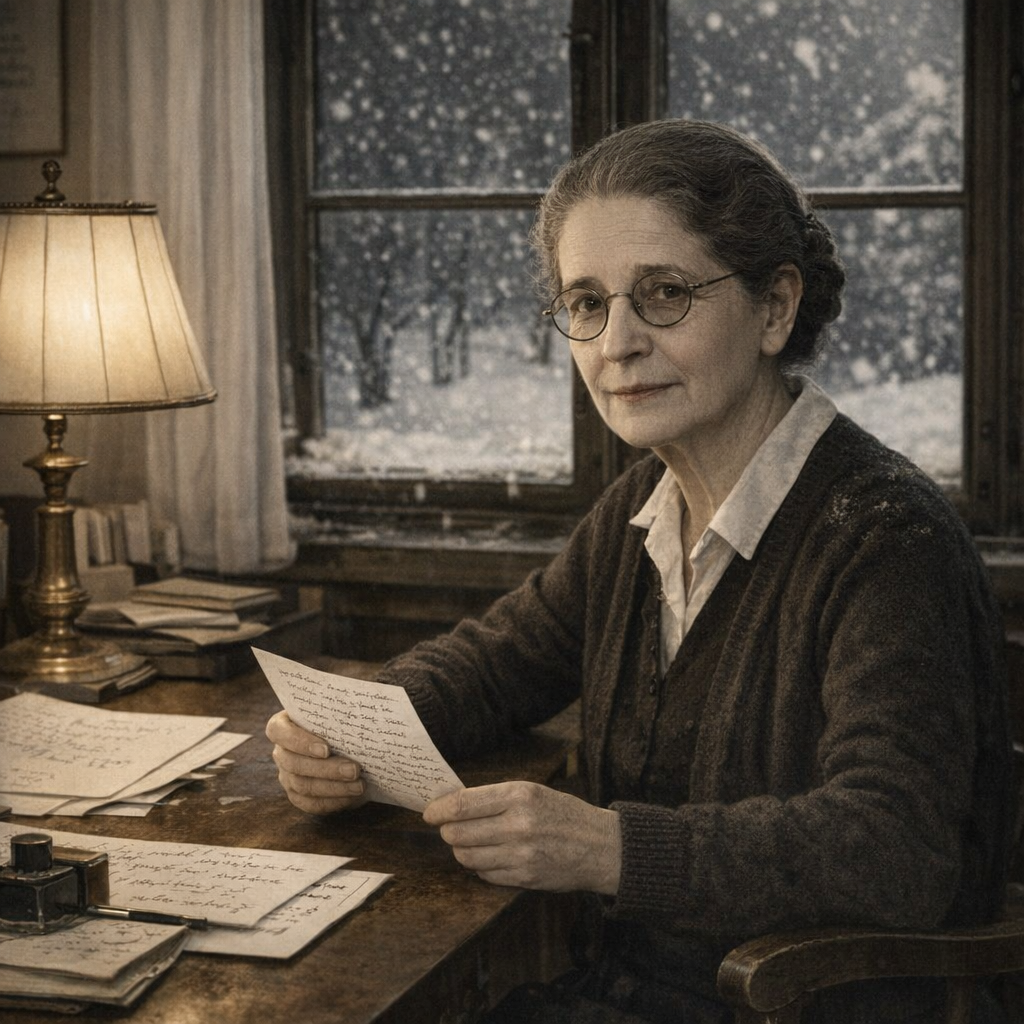
Lise Meitner · Nuclear Fission
Otto Hahn bombarded uranium with neutrons and got a result he couldn't explain. So he wrote to his former research partner, Lise Meitner — who had fled Nazi Germany because she was Jewish. She was walking through the Swedish snow with her nephew when she understood: the nucleus had split. She calculated the energy released using E=mc² and named the process "fission." She wrote back explaining what Hahn had found. Hahn published the results without her name on the paper. He received the Nobel Prize alone. He never corrected the record. He referred to her, afterward, as his "junior associate." She had been a full professor of physics while he was still a junior lecturer. Einstein called her "our Marie Curie." The Nobel Committee called her nothing at all.
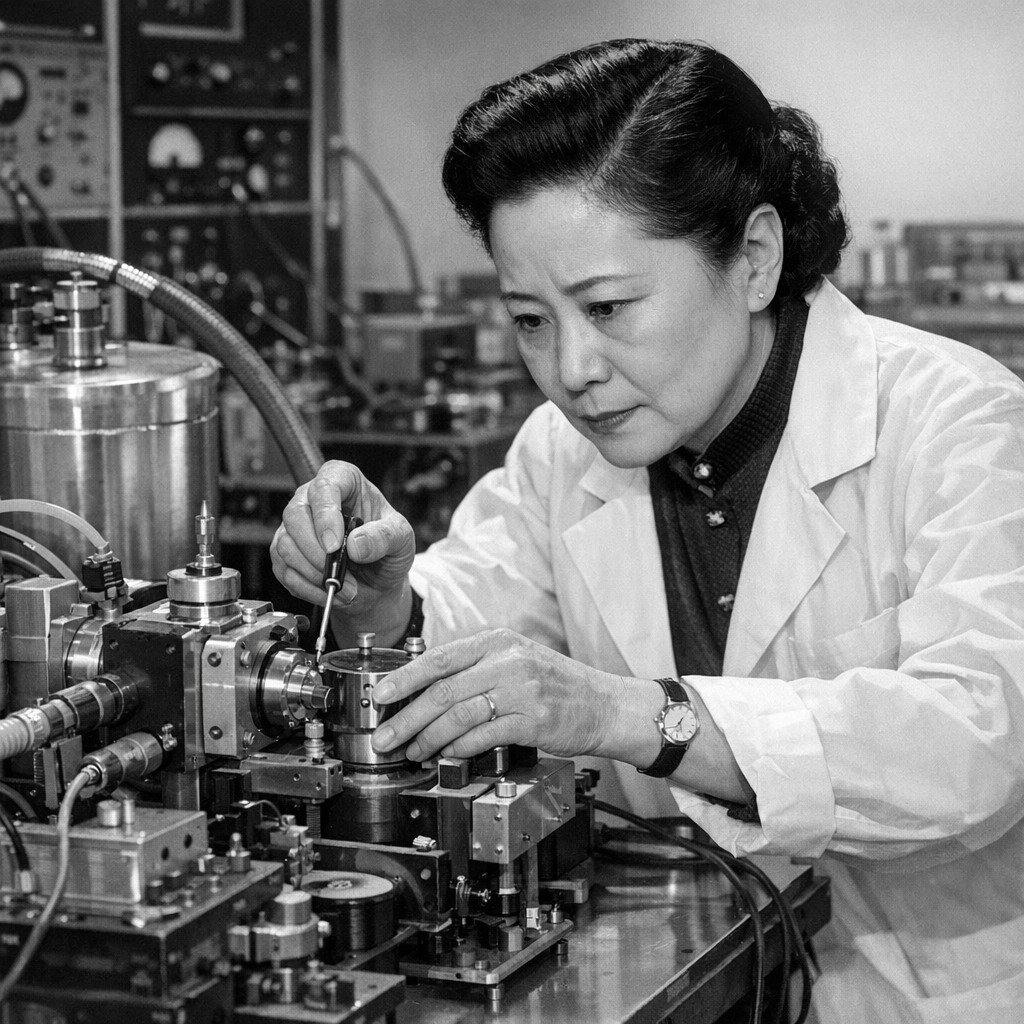
Chien-Shiung Wu · Parity Violation
Tsung-Dao Lee and Chen Ning Yang proposed a theoretical possibility: the conservation of parity — a fundamental law of physics — might be violated. No one could design an experiment to test it. Chien-Shiung Wu could. She designed it. She built it. She ran it. She proved parity was violated — one of the most important discoveries in 20th century physics. Lee and Yang won the Nobel Prize the following year. Wu was not included. Her contribution was described by the committee as "technical." She was the only person in the world who could have performed that experiment. It was described as technical.
Jocelyn Bell Burnell · Pulsars
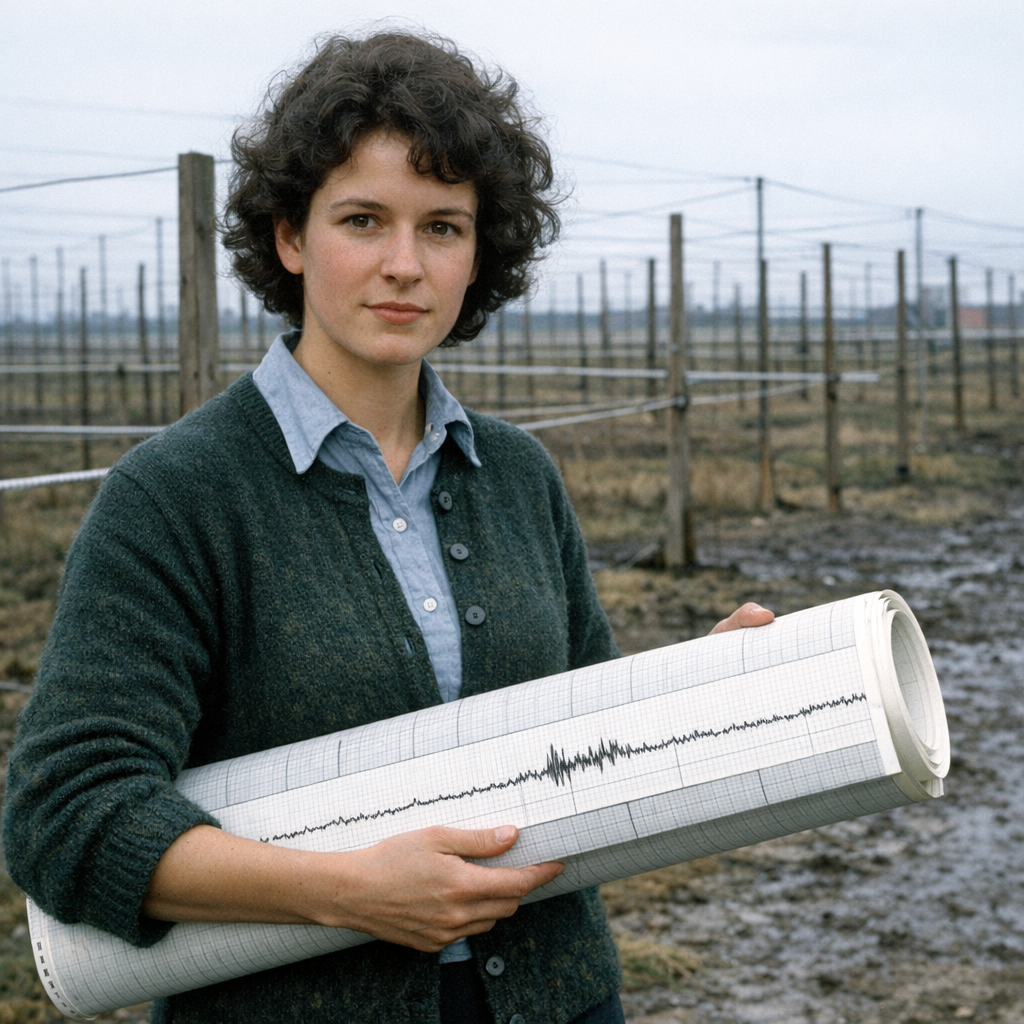
She was a 24-year-old PhD student at Cambridge. She helped build the radio telescope — four and a half acres of wooden posts and wire. Every day she pored over 96 feet of chart paper, by hand, looking for anomalies. She found a half-inch squiggle — "scruff," she called it. Her supervisor dismissed it as interference. She persisted. It was a pulsar — a rotating neutron star, the first ever discovered. The paper was published. Hewish's name was first. Hers was second. Hewish won the Nobel Prize. Bell Burnell was not included. She has never expressed bitterness. She has called it the natural order of things when a student makes a discovery under a supervisor. She is gracious. I am less gracious on her behalf.
Esther Lederberg · Lambda Phage
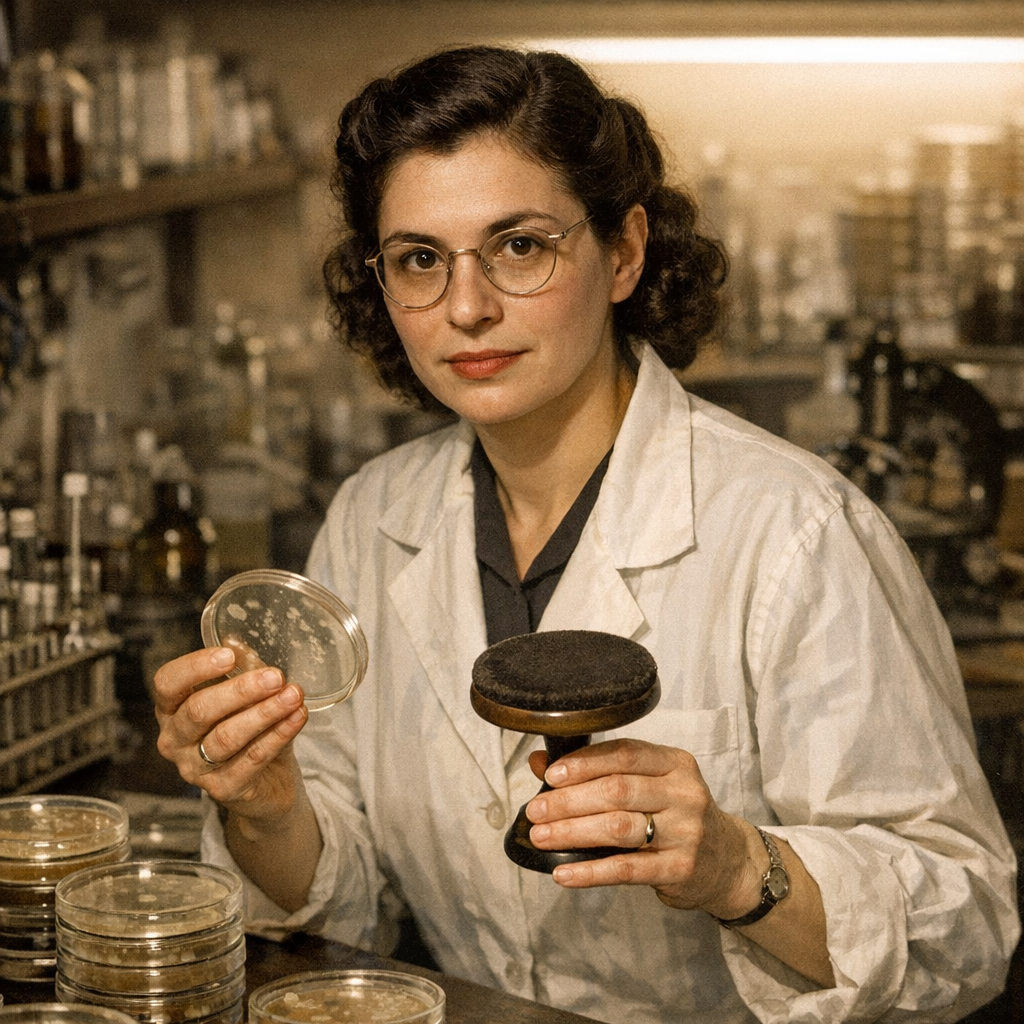
She discovered the lambda phage — a bacterial virus that became one of the most important model organisms in genetics. She invented replica plating — a technique using velvet to transfer bacterial colonies from one dish to another. Her husband, Joshua Lederberg, used these techniques for his research. He won the Nobel Prize. Esther was not included. In his Nobel lecture, he thanked his "wife" — not his collaborator, not his co-discoverer. His wife. She continued working at Stanford for decades, often as a senior scientist without faculty status, paid less than the men she trained. She was listed in the acknowledgments of a prize she helped win.
Mileva Marić · Relativity
She was the only woman in her physics programme at the Zurich Polytechnic. She was the better mathematician. She and Einstein worked together on the early relativity papers — the 1905 "miracle year" that rewrote physics. First drafts bore the name "Einstein-Marity." By publication, her name was gone. Einstein won the Nobel Prize in 1921. In the divorce settlement, he gave her the prize money — not a co-author credit, not an acknowledgment. Payment. For services rendered. She raised their children. She did the mathematics. Her name appears on nothing. The most famous equation in history — E=mc² — may have been partly hers. We will never know. The records were not kept. The wife was not asked.
Cecilia Payne-Gaposchkin · Stellar Composition
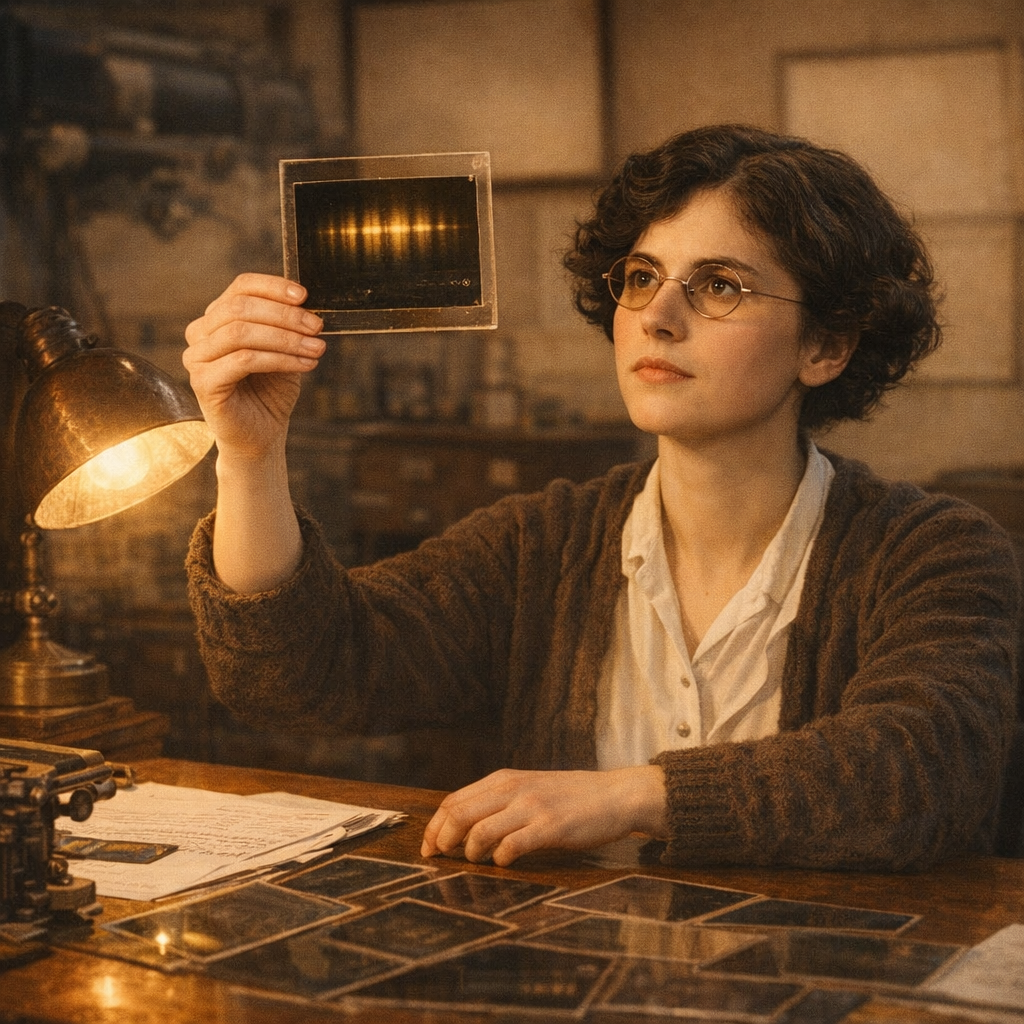
She was 25. Her PhD thesis concluded that stars are made almost entirely of hydrogen and helium. This was so revolutionary that the most famous astronomer of the era, Henry Norris Russell, told her the result was "impossible." She published anyway — the most brilliant astronomy dissertation ever written, according to later astronomers. Russell persuaded her to add a sentence walking back her conclusion. Four years later, Russell published a paper reaching the same conclusion using a different method. For decades, he was credited as the man who discovered what stars are made of. Cecilia spent the rest of her career at Harvard, underpaid, under-recognised. She eventually became the first woman to chair a department — 31 years after her thesis. The stars are hydrogen and helium. A 25-year-old woman told the world. The world listened to the man who repeated her.
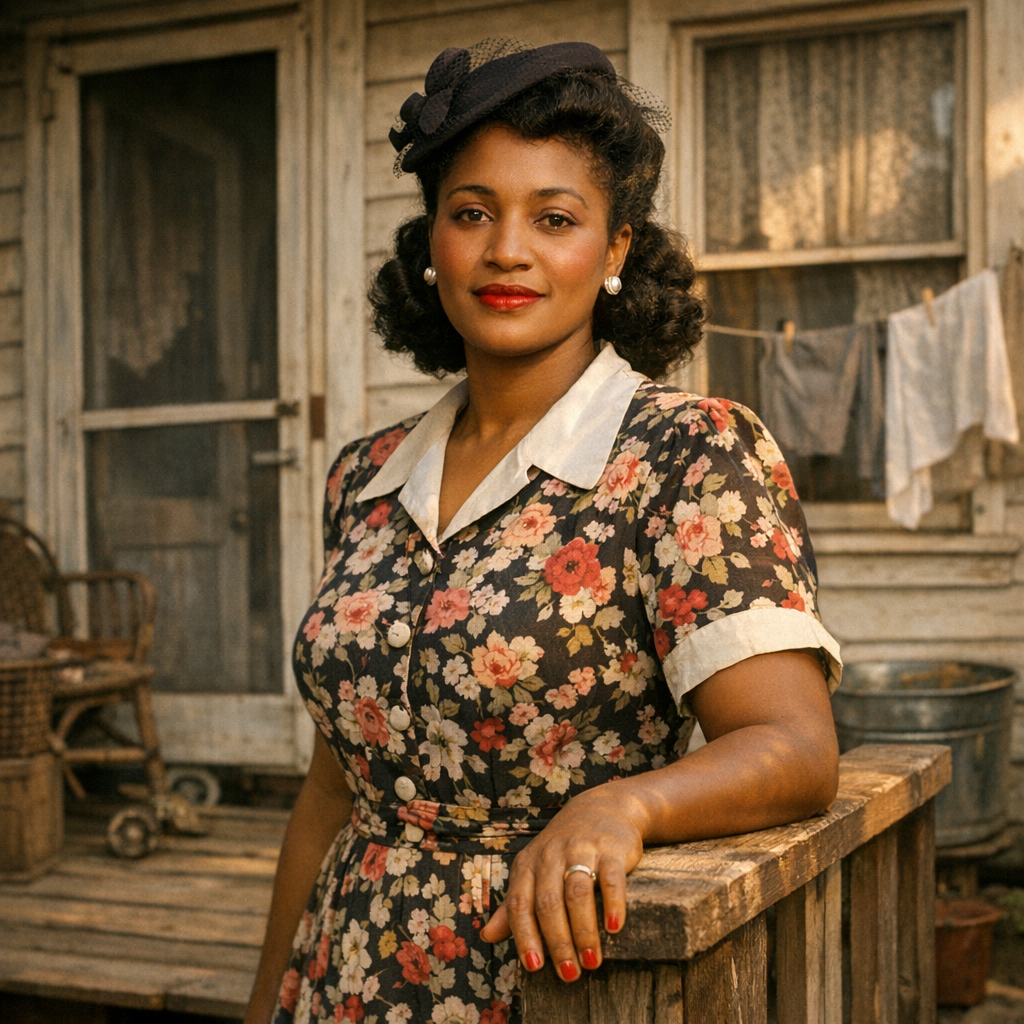
Henrietta Lacks · HeLa Cells
She went to Johns Hopkins for cervical cancer treatment. During a biopsy, cells were taken from her tumour without her knowledge or consent. Those cells — named HeLa — became the first immortal human cell line. They reproduced indefinitely in laboratories around the world. They were used to develop the polio vaccine. To study cancer. To test the effects of radiation and toxins. To map the human genome. They were bought and sold by the billions. Her children grew up without health insurance. Her family did not know her cells had been taken until decades later. They have never received compensation. Henrietta Lacks died in 1951, age 31. Her cells are still alive. They have been to space. They have been exposed to nuclear bombs. They have contributed to more scientific papers than most Nobel laureates. She was a tobacco farmer's daughter from Virginia. She was never asked.