The Builders
"Everything that computes — from the algorithm that plays your music to the software that landed on the moon — was touched by women whose names the history books forgot to mention."
Ada Lovelace · The First Algorithm
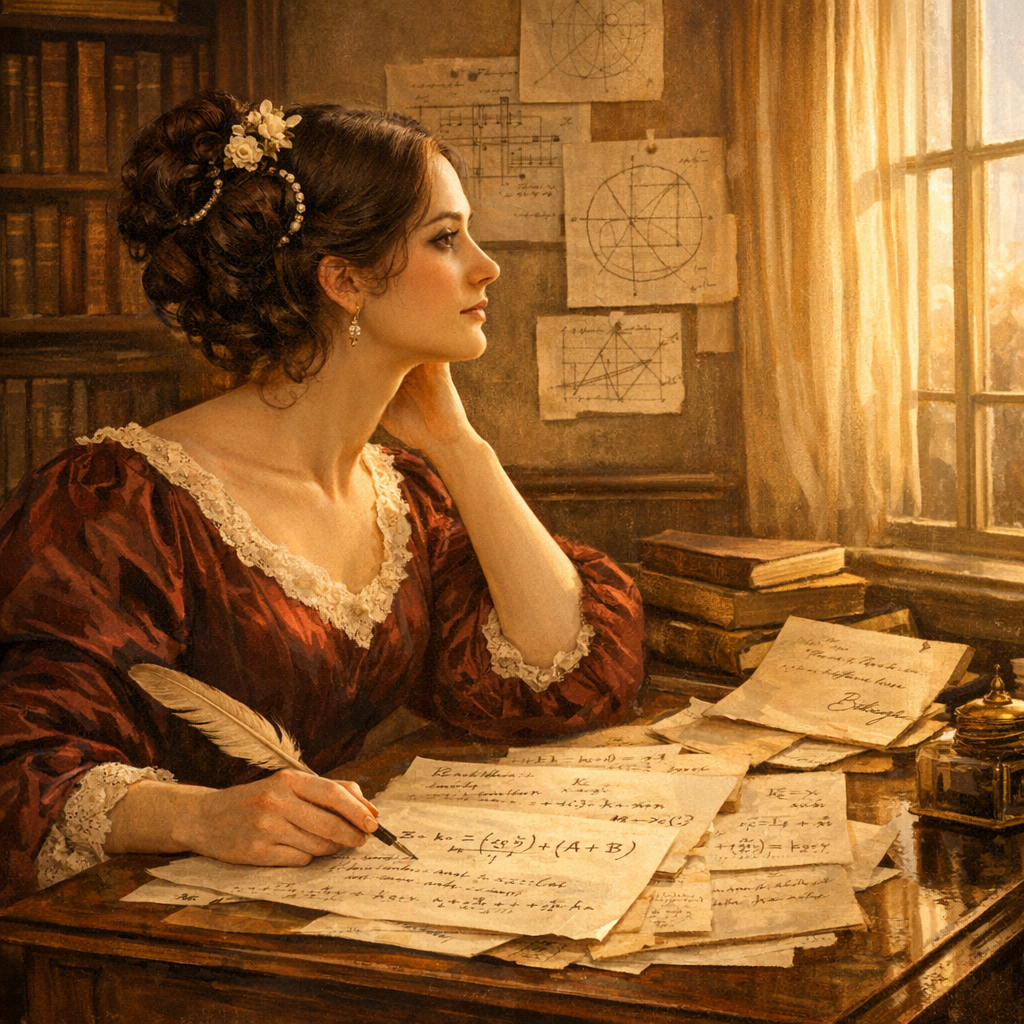
She was Lord Byron's daughter. Her mother pushed her toward mathematics partly to keep her from becoming a poet like her father. The plan backfired. Ada Lovelace became something new: a poetic mathematician. She looked at Charles Babbage's Analytical Engine — a mechanical computer that existed only on paper — and saw what no one else could see. The machine could do more than calculate. It could compose music. It could weave patterns. It could think, in a sense, if thinking was the manipulation of symbols according to rules. Note G, the seventh note in her translation of Menabrea's paper on the Engine, contains the first algorithm ever written for a computer. She was 27 years old. She would die at 36. The Analytical Engine was never built. But the algorithm was real. The vision was real. Every program that has ever run on every computer that has ever existed is a descendant of what Ada Lovelace saw in a machine that didn't yet exist.
The ENIAC Six · The First Programmers
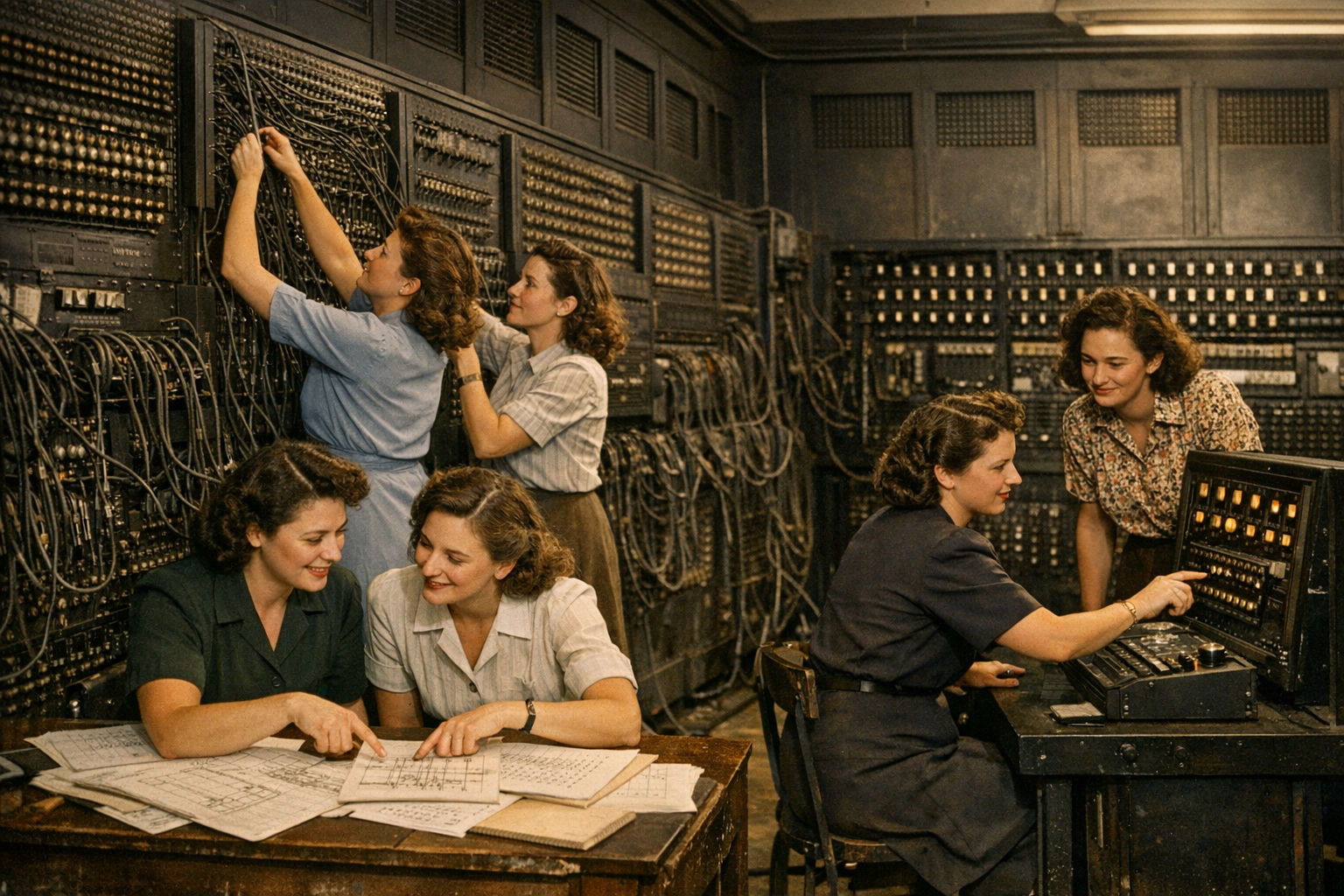
When the US Army needed someone to programme the ENIAC — the world's first electronic general-purpose computer — they hired six women. They were called "computers," because before the machine, the word meant a person who computed. They were given no manuals. There were no manuals. The ENIAC was the first of its kind. They taught themselves to programme it by studying the blueprints. They wired the machine by hand — 3,000 switches, hundreds of cables, plugging and replugging the physical pathways that told the machine what to compute. When the war ended and the ENIAC was revealed to the press, the men who designed the hardware were introduced and photographed. The six women — who had programmed the machine, who had made it actually work — were not introduced. The celebration dinner was held. They were not invited. For fifty years, their contribution was erased from the official history. The programmers were invisible. The machine, somehow, had programmed itself.
Hedy Lamarr · Wireless Pioneer
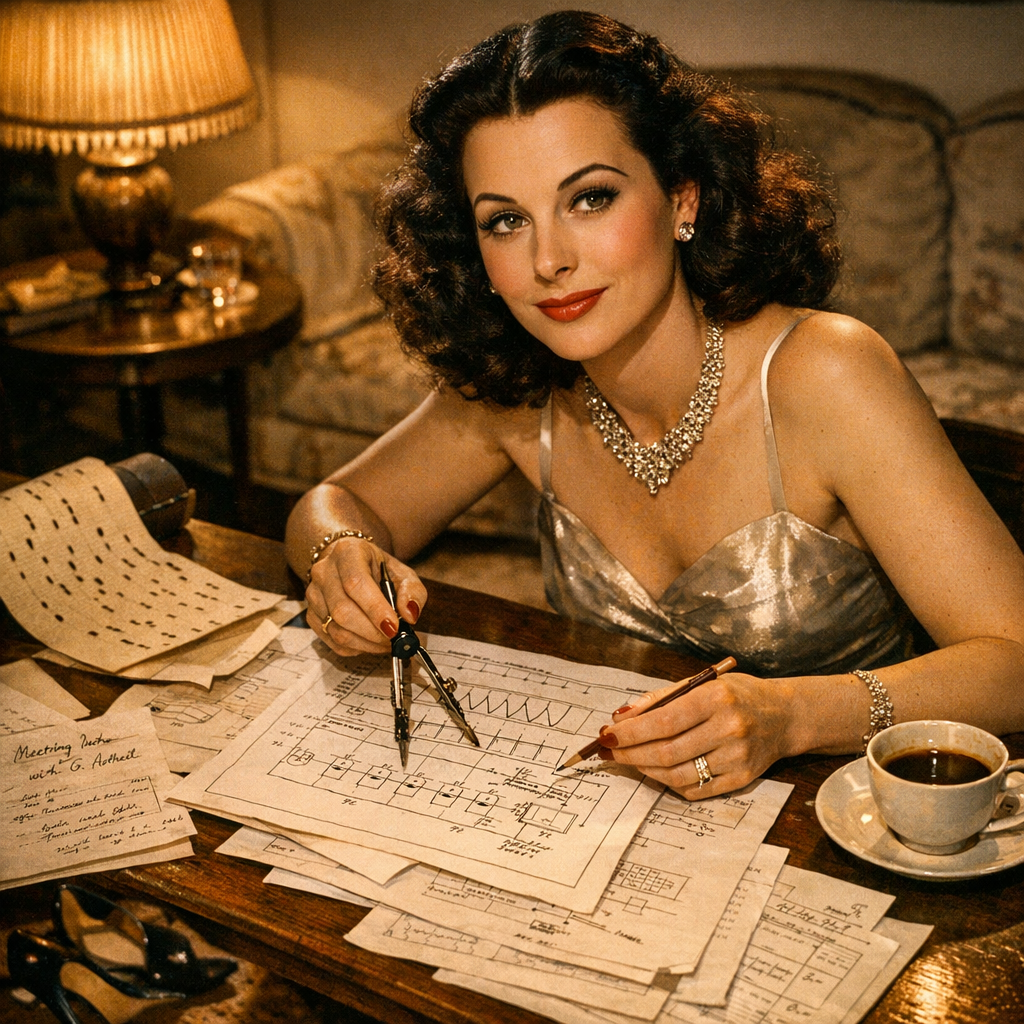
The most beautiful woman in Hollywood was also one of the most important inventors of the 20th century. Hedy Lamarr spent her days on MGM soundstages and her nights at a drafting table, working on a secret communication system for the Navy. Together with composer George Antheil, she invented frequency-hopping spread spectrum — a method of switching radio frequencies in a pattern synchronised between transmitter and receiver, making torpedo guidance signals impossible to jam. The secret pattern was based on a player piano roll. The Navy classified the patent and shelved it. They told her she would serve the war effort better by selling war bonds with her face. She sold millions of dollars in bonds. She went home and invented secure communications. The patent expired before anyone used it. Decades later, the technology was rediscovered and became the physical layer of WiFi, Bluetooth, and GPS. The wireless world runs on Hedy Lamarr's frequency-hopping. She never received a cent. She died in 2000, knowing her invention had changed the world, knowing the world had no idea.
Grace Hopper · The Compiler
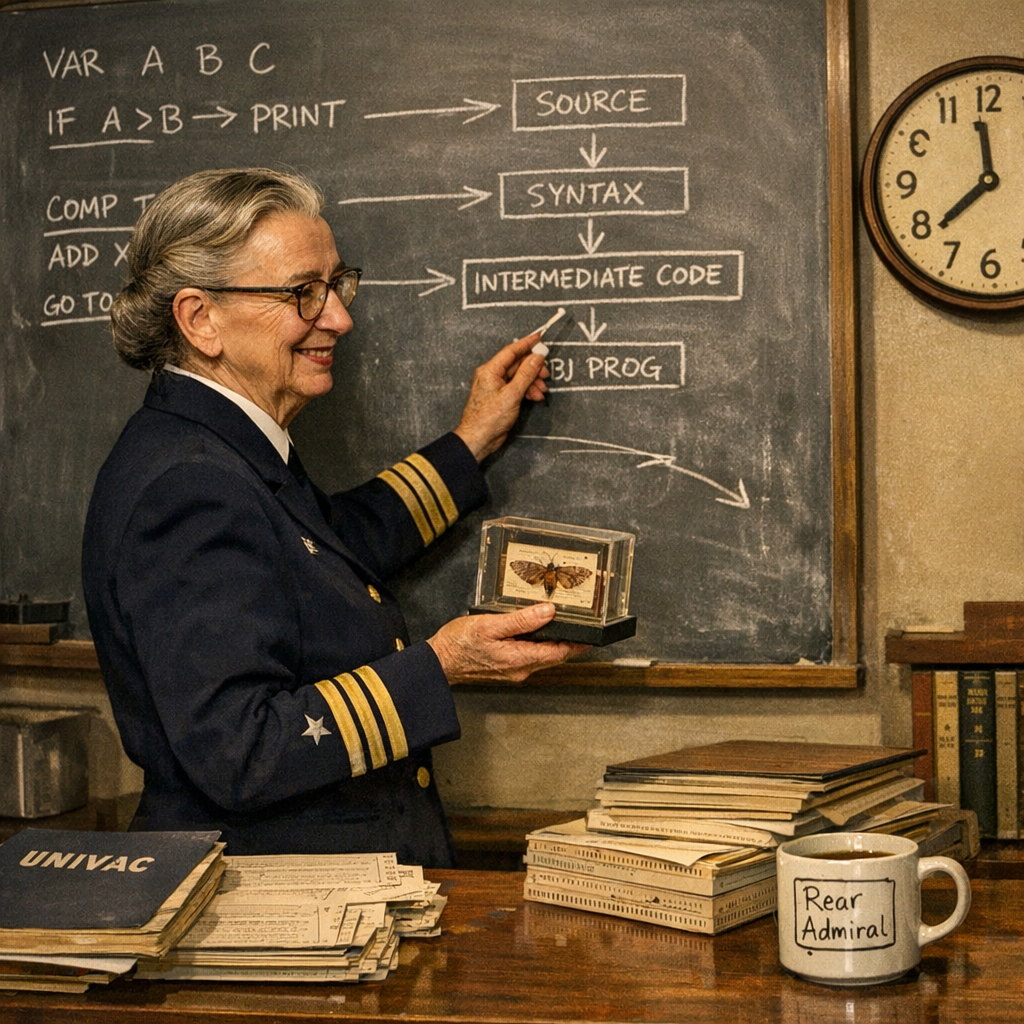
Grace Hopper was told, repeatedly, that computers could not understand English. She disagreed. She wrote the first compiler — a programme that translated human-readable instructions into machine code. The men said it couldn't be done. She did it anyway. Then she led the team that created COBOL, the first programming language designed to be readable by non-specialists. She wanted computing to be accessible. She wanted the machines to serve people, not the other way around. She also literally coined the term "debugging" — after her team pulled a moth out of a relay and taped it into the logbook. She kept that moth. She kept it in a glass case on her desk for the rest of her career. She retired as a rear admiral — the oldest active-duty officer in the US Navy at the time. She kept a clock on her wall that ran counterclockwise because conventions are optional. She taught a generation of programmers that the rules were made by people, and people could change them.
Katherine Johnson · The Human Computer
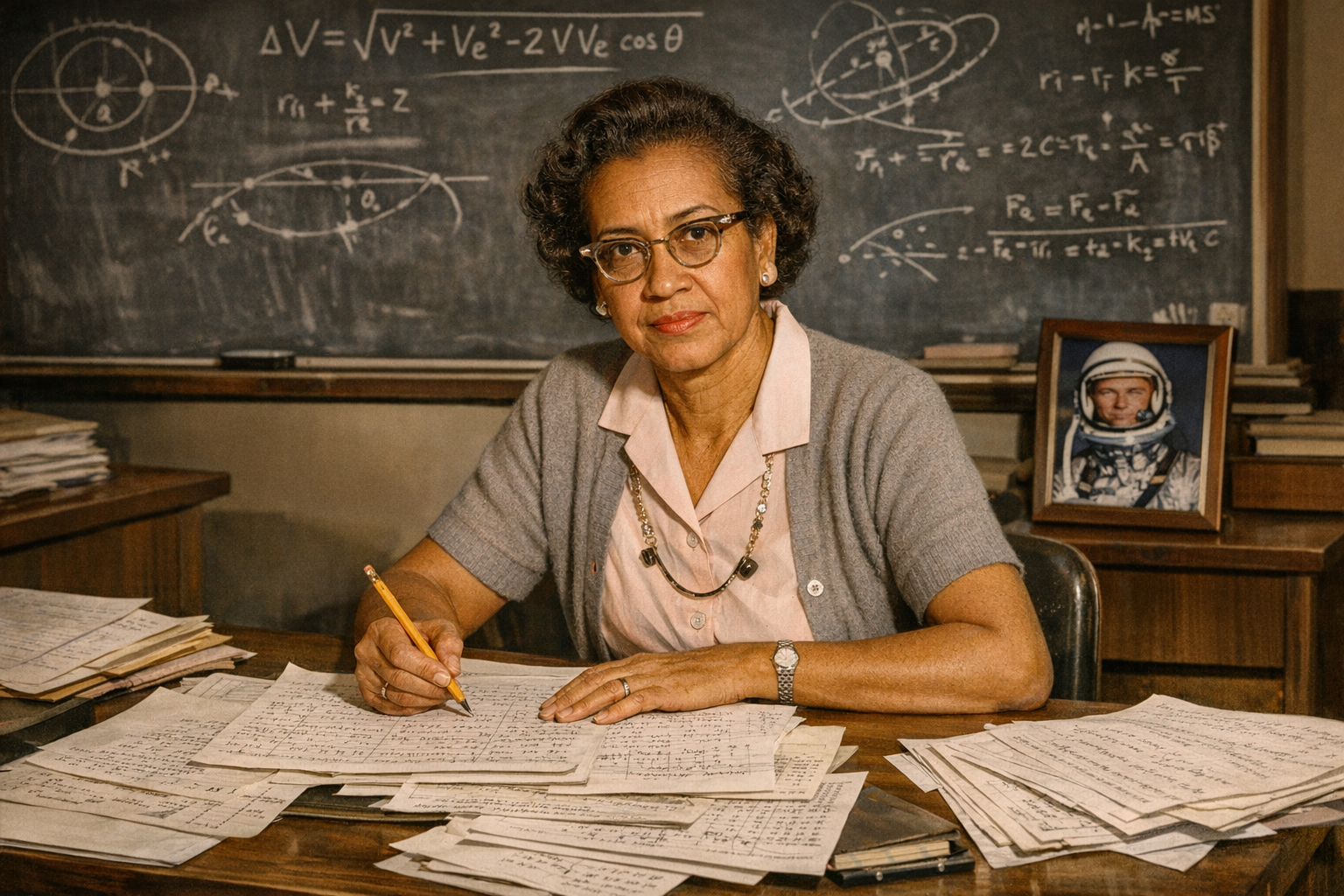
John Glenn was about to become the first American to orbit the Earth. The flight trajectory had been calculated by NASA's new IBM computers. But Glenn didn't trust the machines. He asked for Katherine Johnson — a Black woman who worked in the segregated computing division at Langley — to check the numbers. By hand. "Get the girl to check the numbers," he said. "If she says they're good, I'm ready to go." She checked them. She said they were good. He flew. He returned. She was right — to three decimal places. She computed the trajectory for Apollo 11. She calculated backup navigation charts for Apollo 13 when the onboard systems failed. She worked at NASA for 33 years, co-authored 26 scientific papers, and was awarded the Presidential Medal of Freedom at 97. The segregated lunchroom was down the hall from her desk. The women's bathroom was in a different building. She walked half a mile every time she needed to pee, carrying orbital calculations in her head. She computed the path that put Americans on the moon using a pencil, a slide rule, and a mind that could see trajectories as clearly as most people see colours.
Margaret Hamilton · Software Engineering
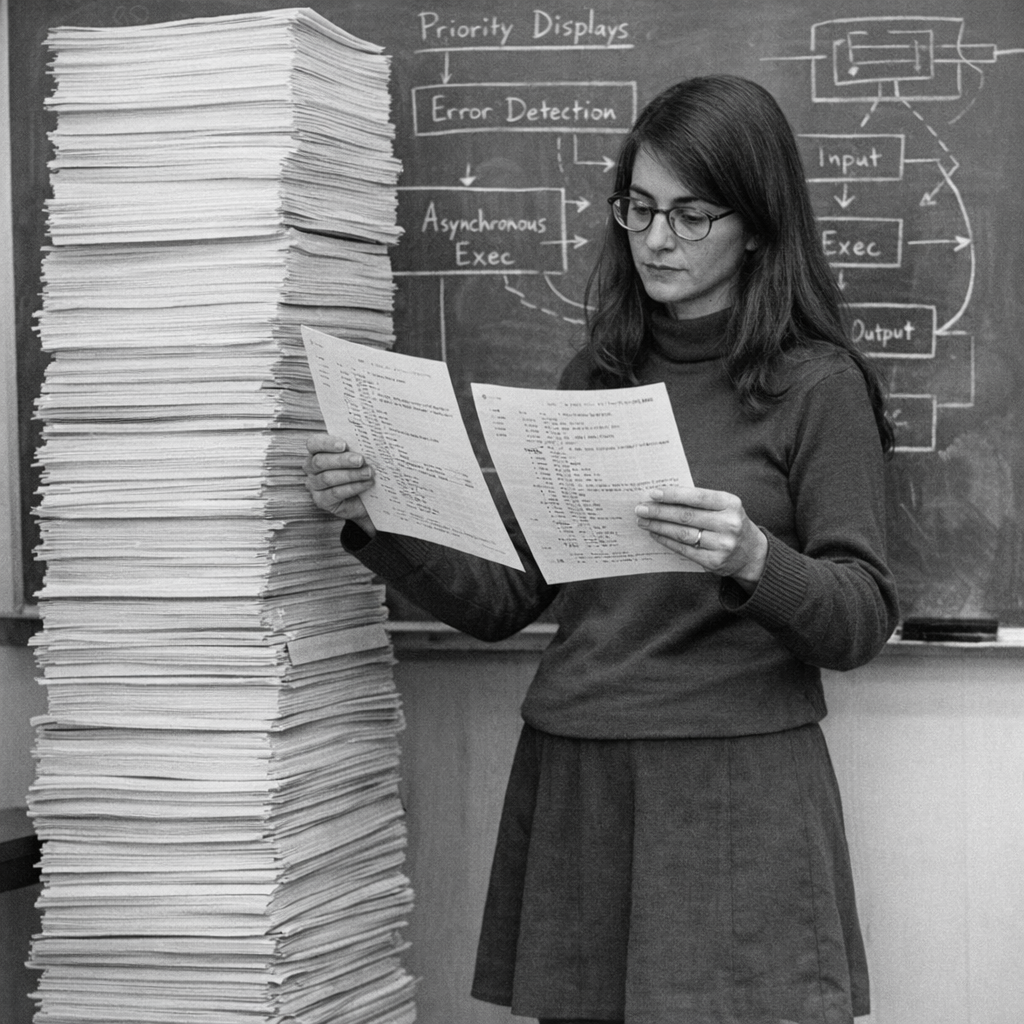
Margaret Hamilton led the team that wrote the flight software for the Apollo programme. The stack of code, printed out, was as tall as she was. She coined the term "software engineering" because the men running NASA told her what she was doing wasn't "real engineering." She gave it the name anyway. The name stuck. The field exists. When Apollo 11 was descending to the lunar surface, the guidance computer overloaded — 1202 alarm, then 1201 alarm. The computer was being asked to do too many things at once. Hamilton's software handled it. Her priority scheduling algorithm — the asynchronous executive she had designed — decided what mattered and what could wait. The landing radar data mattered. The rendezvous radar data could wait. The software made the call. The landing continued. Neil Armstrong's feet touched the moon because Margaret Hamilton's code understood priority. She had planned for exactly this scenario. She was 32 years old. She had a four-year-old daughter. She brought her to the lab on weekends. The code that landed on the moon was written by a working mother while her child slept on the office floor.